


Digital Textile Belt Printer
Why Choose Us
Wide range of Applications
Hangzhou yisheng digital technology Co. Lld. With an independent R&D team and core technology. yisheng products and printin solutions are mainly used in clothing, home textile personalized design and other related fields.
Rich Experience
Hangzhou yisheng digital technology Co. Lld. is a high-tech enterprise specializing in R&D, sales and service support of digital textile printing machine. More than 20 years of industry printing experience.
High Standard Products
70% of engineers are have worked in digital printing industry formore than 10 years; 10 sets of machine can be produced per month.
Professional Technical Team
We have innovative R&D team and had designed control board which is especally used for Ricoh head.
Definition of Digital Textile Belt Printer
Digital textile belt printer is putting colorful patterns and designs onto fabric using a printing press. During the fabric printing process, one or more colors are applied to the fabric in certain areas only and in patterns that are very clearly defined. When a fabric is printed correctly, the colors are bonded to the fibers, making it resistant to wear and tear caused by factors such as washing and rubbing. Now you may wonder if a dye is the same as printing. The dying process is comparable to the printing process. However, the entire fabric is saturated with a single color in the dying process. In contrast, repeat patterns are printed all over the fabric or on certain parts in the printing technique.


Benefits of Digital Textile Belt Printer
The textile industry has been revolutionized by digital printing technology in recent years, offering businesses new and exciting possibilities for design, production, and customer engagement. With the ability to print high-quality, custom designs onto a range of materials, digital textile belt printer has become an attractive option for businesses of all sizes.

Speed
One of the most significant advantages of digital textile belt printer is its speed. Unlike traditional methods, such as screen printing or dyeing, digital printing enables quick turnarounds with minimal setup time. Designs can be uploaded directly from a computer, eliminating the need for extensive manual labor or preparation. Furthermore, digital printing machines can print at high speeds, allowing for faster production times and quick delivery to customers. This means businesses can respond to market trends and customer demands more quickly and efficiently, ultimately improving their bottom line.

Quality
Digital textile belt printer offers unparalleled quality compared to traditional printing methods. The technology allows for precise color matching and sharp, detailed images, resulting in a high-quality finished product. Additionally, digital printing can produce complex designs, patterns, and graphics that are difficult or impossible to achieve with traditional methods. As a result, businesses can create unique, eye-catching designs that stand out in a crowded market, helping to attract and retain customers.

Incredibly versatile
Digital textile belt printer is incredibly versatile, offering businesses the ability to print on a wide range of materials, including cotton, silk, polyester, and more. This flexibility enables businesses to produce a diverse range of products, such as apparel, home textiles, and accessories, all with custom designs. Furthermore, digital printing can accommodate a range of order sizes, from small, customized runs to larger bulk orders. This means businesses can produce what their customers want, when they want it, without the need for costly inventory or waste.
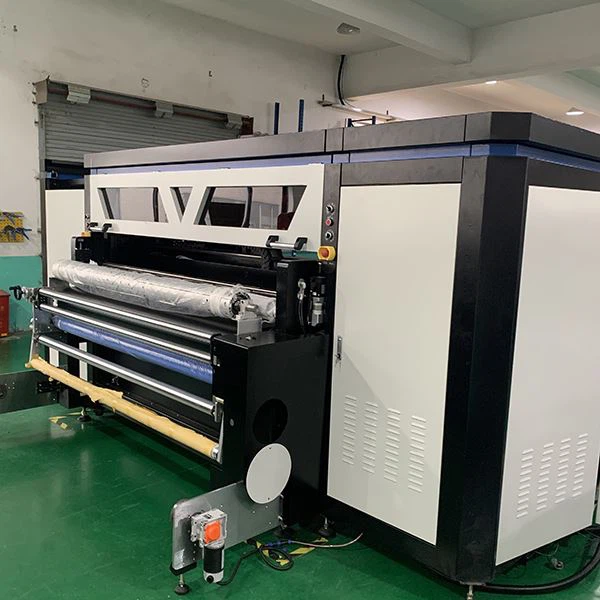
As digital textile belt printer is no longer limited by transfer methods of a traditional printing machine, it can be used for various media and material types. Some of the more common options are:
Thick cardstock – Used for products such as greetings and business cards
Folding cartons – Ideal for creating branded packaging, or labeled boxes for storage or transport
Fabric – A great option for merchandise, apparel showing logos and artwork, and accessories such as tote bags and scarves
Linen – Modern consumers are after more than just the standard t-shirts and caps. Thanks to digital textile belt printer, people can now extend their product ranges to bed sheets, curtains, bathrobes, and even shower curtains.
The versatility of digital textile belt printer has made it the go-to source for mass-produced distributable items. Any industry that requires large quantities of print has turned to digital. Business cards, greetings cards, menus, flyers, newsletters, and flyers can all be easily and quickly churned out in their hundreds and thousands for only a fraction of the cost of traditional printing.
The Printing Process - Digital Textile Belt Printer
Step 1: Design development
The pattern or motif is digitized first once it is transferred from the paper to the computer. There are two distinct approaches to the creation of designs. First is the digitization process; secondly, photos can be scanned straight if there is no need for changes.
After that, the newly produced file is saved in a format suitable for printing. At this point, any adjustments that need to be made to the color combinations or brightness of the photographs are made.
Step 2: Fabric preparation
Before going through the process, to print the fabric must first be treated. Chemicals, often sizing ingredients, are utilized to cushion the textiles produced at this step. It helps to eliminate the fabric crunches and makes the fabric firmer so that it can be fed through the printing machine more easily. On the flatbed, the padding is completed with the assistance of a scrapper.
Step 3: Printing
Images are printed on the substrate with the assistance of the printer server by making use of the appropriate dye classes, and the printed cloth is then dried appropriately. To begin, the cloth is carefully fixed so there is no looseness and no wrinkles.
After that, the head of the printer is adjusted so that it corresponds to the thickness of the cloth, and then the print is started.
Step 4: Fixation of the dye
During the printing, the dyes stay on the fabric's surface; they are not permanently attached. If we use the material, the dye will be removed while we use it since it is not permanent. Because of this, it is essential to fix the dyes to ensure they have a good fastness quality.
The steam chamber is where any printed material that has to be fixed will be maintained. The dye molecules are absorbed into the fabric's fibers from the surface, where they remain forever. The procedure in question is known as the fixation procedure.
Direct-to-garment (DTG) printing is a popular digital textile belt printers used for textile printing on t-shirts and other apparel. This method involves using specialized inkjet printers that directly apply the ink onto the fabric, creating vibrant and detailed designs. DTG printing allows for intricate artwork, gradients, and even photographs to be printed with precision.
Another type of digital textile belt printers is dye-sublimation. This method transfers ink onto a special transfer paper before heat pressing it onto fabric or other surfaces. The heat causes the ink to turn into a gas, which then permeates the fibers of the material, resulting in vivid and long-lasting prints. Dye-sublimation printing is commonly used for producing custom clothing, sports jerseys, promotional items, and personalized gifts.
Posters, or signage materials, digital textile belt printer has revolutionized the fabric industry with its large format printers. These fabric machines are capable of producing high-quality prints on various materials such as vinyl, canvas, or paper. Large format printers utilize advanced print heads that can handle wide swaths of fabric while maintaining sharpness and color accuracy.


For fabric printing and dyeing factories, the printing width is a crucial consideration when purchasing a digital textile belt printer.
Standard printers typically offer widths between 1.6 to 1.8 meters, catering to the majority of fabric widths used in everyday clothing, home textiles, and other products.
For instance, HPRT's DA188S boasts a maximum input width of 1900mm and an actual printing width of 1850mm, perfect for printing items like sportswear, yoga wear, and home textiles including pillows, towels, and indoor decorations.
For larger projects involving oversized curtains, banners, or wide-width fabrics, wide-format digital textile printing machines are the go-to choice. These fabric printers can handle widths up to 3.2 meters or more.
Digital textile belt printer is expanding its range to include such wide-formats, aiming to cater to a broader spectrum of printing needs, including large-scale soft signage and banners.
In the textile and apparel fabrics, digital printing process because of a high precision printing, no plate, flexible volume, environmental protection, small footprint and other advantages, by the industry's favorite.
1. Transfer or direct injection
The choice of printing process directly determines the choice of digital textile belt printer type. For the printing of fabric printing is the choice of transfer process or direct injection process, the choice of digital textile belt printer has a directional role in the decision. Transfer printing process investment is small, the printing of high precision, but the application of the fabric has been limited, mainly for chemical fiber fabrics. The direct injection process generally need to fabric sizing, steaming, washing and other sectors, relatively large investment, but the fabric for a wide range of applicable to polyester, nylon, cotton, linen, silk, wool, modal fabric type.
2. The printing precision to see the fabric
Enterprises can choose according to the different fabrics and customer needs to meet the customer's printing precision equipment. In general, the fiber is relatively smooth and delicate fabrics with high precision requirements, such as silk, chiffon, etc .; fiber rough fabric of the lower accuracy requirements, such as canvas, sweaters and so on. In the choice of precision printing should pay attention to, not the higher the better accuracy, because the accuracy and efficiency of the two opposing factors, if the higher the accuracy requirements, the lower the efficiency.
3. Domestic and imported than to be
As china's technological progress and the maturity of the manufacturing process, china-made digital textile belt printer and the gap between the import machine has been getting smaller and smaller. Enterprises choose domestic digital textile belt printer or imported digital textile belt printer, the main need to consider the following factors:
• The cost factor. Imported equipment as a result of tariffs and freight factors, so the price of imported digital textile belt printer than the price of similar domestic digital textile belt printer is higher.
• The key technologies. As the key components of digital textile belt printer - nozzle, are basically imported to japan-based production of the nozzle. So whether it is domestic digital textile belt printer or imported digital textile belt printer, the key equipment used is basically the same.
• After-sales service. Whether domestic equipment or imported equipment, good after-sales service are selected digital textile belt printer to consider one of the important factors.
Hangzhou Yisheng Digital Technology CO.LTD is a national level High- Tech En-terprse, offering rapid and rliable digital printing machines.
We have innovative R&D team and had designed control board which is especially used for Ricoh head. 10 sets of machine can be produced per month.
70% of engineers are have worked in digital printing industry for more than 10 years.